
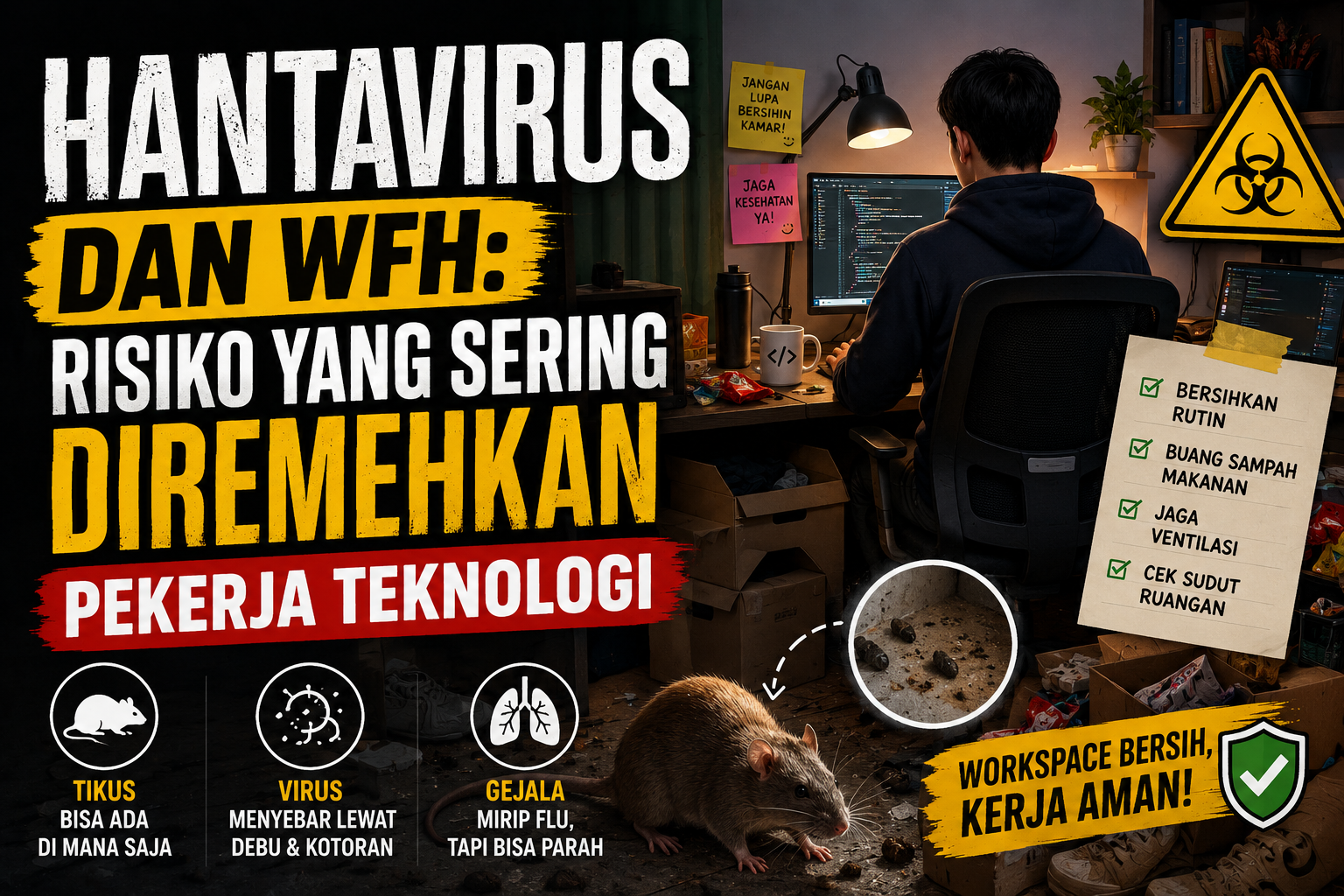
Hantavirus, WFH, and the Habits Many Tech Workers Ignore
Since remote work and WFH became more common, many people in tech now spend most of their time indoors.
Programmers, designers, editors, analysts, and even gamers often have similar routines:
sitting in front of a computer for hours
rarely leaving the room
turning their workspace into their main living area
surrounding themselves with snacks, cables, boxes, and gadgets
At first, it feels completely normal.
But one thing many people don’t realize is:
a dirty or rarely cleaned workspace can attract rodents, and that can increase the risk of diseases like Hantavirus.
What Is Hantavirus?
Hantavirus is a virus commonly spread through:
rodent droppings
rodent urine
saliva
contaminated dust particles
People can be exposed when:
cleaning dusty areas without protection
sweeping spaces contaminated by rodents
staying in damp, poorly maintained rooms
Early symptoms often feel similar to the flu:
fever
muscle aches
headaches
fatigue
Which is why many people ignore it at first.
Why Is This Relevant to Remote Workers and Programmers?
Not because of the job itself.
But because of the lifestyle.
Many tech workers:
work in enclosed rooms
stay up late frequently
eat near their desk
rarely clean corners or hidden areas
keep piles of old boxes and unused equipment
And over time, that kind of environment can become attractive to rodents.
Especially when there are:
food leftovers
cluttered storage
humid areas
dark corners that rarely get cleaned
Aesthetic Setups Can Be Misleading
Online, programmer setups often look amazing:
RGB lights
ultrawide monitors
mechanical keyboards
clean wooden desks
But outside the camera frame?
Sometimes it’s chaos
Many people constantly upgrade:
laptops
GPUs
monitors
keyboards
but forget to:
clean under the desk
throw away food trash
wipe dust regularly
check hidden corners
A healthy workspace matters more than just an aesthetic one.
Simple Habits That Actually Help
No need to panic.
Just start with simple habits:
clean your workspace regularly
avoid leaving food scraps around
throw away unused cardboard boxes
improve ventilation
wear a mask when cleaning dusty areas
check room corners occasionally
Especially if you:
work fully remote
spend most of the day indoors
often work late at night
treat your workspace like your main living space
Final Thoughts
Tech workers usually care a lot about:
laptop performance
fast internet
data backups
server security
But sometimes forget to maintain the most important environment:
the place where they spend hours working every single day.
Because the ideal workspace is not just about RGB lights and expensive monitors.
It should also be clean, healthy, and safe to live in long term.